Prologue
So, I’m going to be 60, or if you’re reading this I am 60. It doesn’t feel momentous, I’m not even sure it should be. When I was growing up it did. I was the youngest child of parents who had me much later than most of their peers. So when I hit 20, my father was almost 60 and he had a big birthday. It felt like a marker, or something. Distance. Arrival. If I’m honest, and given the rest of my experience with family members in their late 50’s early 60’s, it felt like decline, and probably death soon afterwards.
 It seemed a long way away.
And yet here I am.
I am 60 FFS.
What’s shifted is not some sudden sense of wisdom (I am still hoping that will arrive). But perspective. The ability to see patterns that were harder to recognise when I was in the middle of things, or just trying to keep up. And a growing sense that many of the spaces, roles, organisations, structures, that I’ve worked in are more fragile than we like to admit.
The questions have not changed much. How do things actually work, as opposed to how we say they work? Who gets to shape them? And what happens when they start to shift underneath us?
That last one has been harder to ignore the older I get.
Side A: How did I get to 60?
I suppose this is the “about me” bit. The bit that usually turns into a list of roles and titles. I have had a few of those, and they have been useful, but they are not the most helpful way of explaining who I am.
There is a thread, even if I have not always described it that way. I have spent most of my career somewhere between practice and interpretation. Close enough to the work to see what is really happening, but far enough back to try and make sense of it.
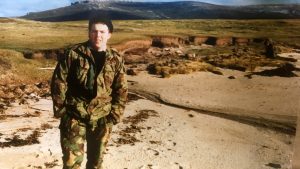
I did not arrive in this space through a neat academic route. I left school without qualifications and, after some time on what Thatcher euphemistically called Youth Opportunity Schemes, I joined the military, and found myself literally at sea, and for some of that time, under it. The military was my first experience of systems at scale. Clear structures, defined processes, and zero tolerance for things not working. It gave me a particular view of how organisations operate, and how quickly the gap between what is written down and what actually happens becomes visible. There is an oft cited phrase in programme and project management – probably from some WWII general “No plan survives first contact with the enemy.” Some of us understand that in a more in depth way through our experience than just a phrase on a PowerPoint slide.
After leaving the military, I worked for BT, was made redundant, and did various temporary jobs before someone said I should get a proper education.
Starting as a mature student carries baggage. It made me hungry. I studied Environmental Science because I had always been interested in the natural world. What I did not expect was how much it would shape how I think. Ecosystems, chemistry, physics, law, economics. All interacting systems. I still recognise that way of thinking in the work I do now.
After university I took a “temporary role” in learning technology. That meant dealing with real constraints. Systems that didn’t quite work. Staff being asked to change practice without support. Students navigating whatever we put in front of them (including a load of random stuff generated with Asymetrix Toolbook!!) It made me wary of simple solutions and slightly suspicious of anything described as transformational.
From there, the focus shifted, but not completely. From tools to systems. From implementation to infrastructure. From projects to policy.
I ended up doing a lot of translation. Between policy and practice. Between technical and non-technical communities. Between what institutions say they are doing and what is actually happening on the ground. That translation is not always comfortable.
I moved from institutional roles into national work, through projects like FDTL (Fund for the Development of Teaching and Learning, the early part of my career was full of acronyms!) and then the Learning and Teaching Support Network. LTSN was not a great experience. It was the first time I encountered outright academic prejudice. Someone straight out of their PhD with no experience doing the job they were appointed to being valued more highly than someone with more experience was not financially subtle. It also exposed how much disdain some disciplines hold for other disciplines.
What mattered more, though, was what came next. With encouragement from my girlfriend, now my wife, I applied for a national role focused on technology and disability. They saw potential and asked me to build something. The five years I spent at TechDis changed me. It shifted my perspective from local problems to system-level, and political questions.
After that I moved to “central” Jisc, running large multi-million pound programmes and working across the sector. In one role or another, I have been there ever since.
Looking back, the roles matter less than the pattern. Moving between practice, systems and policy. Trying to understand how things actually work, and why they so often do not behave as we expect.
Changing learning landscapes and digital leadership
The Changing Learning Landscape work, developed with the Leadership Foundation for Higher Education and in close collaboration with Sarah Davies, started from the ground up. Not with strategy, but with practice. What staff and students were actually doing, rather than what institutions said they were doing. We looked for the dissonance between strategy and practice.
Bringing together voices from across the sector, one thing became clear quite quickly. There is no single learning landscape. There are multiple, overlapping ones, shaped by discipline, institution, resource and context. What looks coherent at policy level fragments in practice.
What surfaced repeatedly was divergence. Institutions taking different approaches. Staff interpreting change in different ways. Students experience very different versions of what is often described as the same system. That divergence is not new, but making it visible gave a lot of insights.
The work also exposed a gap between narrative and reality. The language of transformation sits comfortably in strategy documents. It is less evident in day-to-day practice, where change is often incremental, partial, and constrained by existing structures.
Sitting in those conversations, I became very wary of neat stories about change. The reality is messier, and more uneven.
The digital leadership work came at the same problem from the other direction.
I designed and led the digital leadership course through Jisc, working with colleagues including Zoe Gardiner, James Clay, and external collaborators such as David White, Beccy Dresden, Kerry Pinny, Donna Lanclos, and Marcus Elliot. The focus was on working with senior leaders across the sector to make sense of what digital meant for their institutions in practice. Not in abstract terms, but in the context of competing priorities, limited resources and institutional histories.
What became clear was that digital was often being treated as a set of projects. A strategy, a programme, a collection of tools. Something that could be contained. That framing does not hold for very long.
The decisions that mattered were not about the technology itself. They were about priorities, trade-offs and institutional values. Who gets the investment. What gets protected. What gets allowed to change.
I enjoyed working directly with people in the sector on both Changing Learning Landscape and Digital Leadership. It shifted the focus away from adoption of technology, and towards capability. Not just individual skills, but organisational capability. Governance, data, infrastructure, decision-making. The things that determine whether change is absorbed or resisted.
Technology does not transform institutions. Institutions transform themselves, sometimes using technology. When that distinction is missed, the work tends to stall.
Putting these two strands together reinforces something that has been consistent across my work: change in education is not primarily a technical problem. It is a systems problem. It involves people, structures, incentives and histories as much as it involves tools.
Digital leadership is less about leading digital and more about leading in a context where digital is embedded. It requires decisions that cut across traditional boundaries, and a willingness to engage with trade-offs that are not always visible.
The Changing Learning Landscape work provided the counterbalance. It demonstrated how whatever is decided at leadership level is interpreted, adapted and sometimes resisted in practice, and the gap between those two perspectives is where most of the difficulty sits.
And, increasingly, that is where most of the work needs to happen. After years of working in and around digital, I am less and less convinced that the hardest problems we face are technical.
They are political.
About who gets resources. Who defines value. Who carries risk. Who gets heard, and who does not.
Technology sits inside those decisions. It does not resolve them.
Covid: when things had to work
Covid did not transform higher education. It forced it to operate very differently, very quickly.
What stands out, looking back, is that it worked. Not perfectly, not evenly, but it worked. Teaching continued. Assessment continued. Research adapted. Institutions kept going under conditions that would previously have been considered unmanageable.
I think that matters.
For years, we had been talking about digital transformation. Strategies, roadmaps, programmes. When the moment came, much of that language fell away and what was left was practice. People making things work, often with limited time, imperfect tools, and a lot of uncertainty.
Some things moved faster than anyone expected. Decisions that would have taken years were made in days. Practices that had been resisted became normal almost immediately.
But what was more interesting was what we heard from staff and students at the time.
Students did not talk about transformation. They talked about access, clarity and connection. Whether they could get to what they needed. Whether they understood what was expected of them. Whether they still felt part of something.
Staff did not talk about innovation. They talked about workload, adaptation and care. Holding courses together, supporting students, managing their own uncertainty. Often doing all of that at the same time, with very little separation between work and everything else.
There was also a strong sense of visibility. Students saw more of the effort that went into teaching. Staff saw more of the complexity of students’ lives. The system became more transparent, not by design, but by necessity.
At the same time, the underlying constraints did not disappear. Infrastructure, capability, inequity. They became more visible. The experience was not consistent. Staff and students did not all have the same access, support or context. The idea of a single institutional response did not really hold.
But despite that, the higher education system held.
For me, that reinforced something I had been circling for a while. Change does not happen because a strategy says it should. It happens when people, systems and decisions align under pressure.
It also made something else clearer: the importance of listening. Not in a performative way, but as a way of understanding what is actually happening. The gap between institutional narrative and lived experience does not close on its own.
Covid narrowed that gap, briefly. It made the experience harder to ignore.
It also changed how I think about pace. Rapid change is possible, but it is not the same as stable change. What happens afterwards, what gets embedded, what gets dropped, becomes just as important as the initial response.
Looking back, Covid feels less like a disruption and more like a moment of clarity.
It showed what higher education can do when it has to.
It also showed how uneven that capability is, and how much of it depends on things that are not always visible.
Automating academia
Covid was a huge disruption, and it was not long out of the pandemic that another disruption turned up. Generative AI. I started working with new colleagues, Richard Watermeyer, Donna Lanclos and Cathryn Knight. We looked at how generative AI was being used by academics, and what that told us about the state of academic work. It’s been a good and productive collaboration, producing this paper, Generative AI and the Automating of Academia and a follow-up in Nature.
Our starting point was not optimistic.
Academia was already under strain. Workload, precarity, performance pressure. The expectation to produce more, more quickly, and with visible impact. Much of that is framed through audit, metrics and comparison. None of that is new, but it has intensified over time.
So AI did not arrive into a stable system. It arrived into one that was already stretched and precarious.
What we found, through the survey, was that academics were using AI in ways that made sense given that context. Not as a radical tool for rethinking scholarship, but as a way of coping. Summarising, drafting, managing administrative tasks. Trying to create space in a system that does not offer much of it.
There is a temptation to see that as efficiency. It is not that.
It is an adaptation, in the same way that we sometimes see adaptations in nature in stressed ecosystems.
AI becomes a way of keeping up with a set of expectations that are already difficult to meet. It does not remove the pressure. In many cases, it risks increasing it. If work can be done faster, then more work can be expected.
That is the pattern.
Technology promises relief, but in systems driven by productivity, it often results in intensification. The baseline shifts.
There were also more uncomfortable signals in the data.
Some academics resisted AI use entirely, framing it as a threat to authorship, creativity and identity. Others embraced it as a way of accelerating output. Some used it to clear space for what they considered meaningful work. Others used it to meet institutional demands more efficiently.
What becomes clear is that AI does not produce a single response, but amplifies existing positions.
It also raises a more difficult question. What is academic work?
If significant parts of that work can be automated, delegated or accelerated, then what remains? What is the contribution that cannot be outsourced? The paper we wrote does not answer that question, but it makes it harder to avoid.
There is also a risk that AI reinforces the very dynamics that many academics are already struggling with. More output. More comparison. More pressure to perform. A further shift towards individual productivity over collective work.
In that sense, AI is not a disruption. It is an extension.
But there is another way of reading what we saw happening.
By making these dynamics visible, we can use AI to create a moment of reflection. A chance to ask whether the current model of academic work is sustainable, or even desirable. The paper points towards ideas like slow scholarship and refusal, not as solutions, but as ways of thinking differently about what academic work might be.
What sits underneath all of this is less comfortable than the discussion about tools or productivity. If writing can be assisted, if synthesis can be accelerated, if parts of academic work can be delegated or automated, then the question is not what AI does, but what is left of the work itself. For some, that sharpens a defence of authorship and intellectual identity. For others, it exposes how much of what we do has already drifted away from anything that feels like craft. In that sense, AI is not eroding something intact. It is revealing something already under strain. The risk is not that we produce more, faster, but that we lose sight of what the work is for, and what it means to do it well.
Generative AI has often been described to me as a (another) disruption. I’m not convinced.
It feels more like a mirror. It reflects back the system as it already is. The pressures, the incentives, the compromises. It makes visible what was previously easier to ignore.
Which is why the conversation is uncomfortable. Not because AI is new, but because what it reveals is not.
For me, this connects directly back to Covid.
That was a moment where the system had to work. This was, this is, a moment where we have to decide what the system, what HE, is for.
Research Excellence, Generative AI, and the questions they raise
What is a system for? That question doesn’t sit in the abstract for very long. It becomes very real when you look at something like the REF.
So I and Richard Watermeyer conceived of a project to look at the REF through the lens of Generative AI. And with support from Liam Earney who supported us from Jisc, and Verena Weigert from the Research Strategy team, and also Tom Crick (Swansea) Donna Lanclos, and our brilliant RA on the project Rodolfo Benites, we started looking at the impact of Generative AI on the REF.
The REF-AI project started with a fairly simple provocation. If generative AI can already draft, summarise and organise complex material, what does that mean for a process as structured, resource-intensive and consequential as the REF?
The answer, based on work across 16 institutions, interviews with REF leads and Pro Vice-Chancellors, and a national survey, is that this is not a hypothetical question. It’s already happening.
AI is being used to draft environment statements, synthesise outputs, organise evidence, and support the production of impact case studies. Not in a dramatic, headline-grabbing way. In a quiet, practical way. As part of the work.
At one level, that makes complete sense.
The REF is expensive, time-consuming and, at times, overwhelming. Estimates suggest the last cycle cost the sector hundreds of millions, with projections that future iterations could be even more resource intensive . Against that backdrop, AI looks like relief. A way of reducing burden, increasing consistency, and making the process more manageable.
But that is only the surface.
What became clear through the project is that AI does not stay contained within those tasks. It starts to change how institutions understand themselves.
People talked about using these tools to bring together data, outputs and narratives in ways that had not been possible before. To “know themselves” as institutions. To build new forms of institutional memory .
That is not just efficiency. That is reconfiguration.
The REF has always shaped behaviour. It defines what counts, how work is organised, and how value is assigned. If the way REF submissions are constructed changes, then the behaviours that sit behind them will change as well.
And this is where it connects back to my earlier work.
If AI accelerates parts of the process, then the system does not slow down. It absorbs that efficiency. Expectations shift. Output increases. The baseline moves.
There are also more difficult questions that sit underneath this.
Questions about authorship, trust and judgement. Questions about bias and accuracy. Questions about what happens when parts of the narrative being assessed are themselves generated or shaped by the tools being used to prepare them .
What was striking in the work was not that these concerns existed. It was that they coexisted with adoption.
People are cautious. But they are also pragmatic, which creates a different kind of problem. Not whether AI is used, but how it is governed.
The recommendations that come out of the project are, in some ways, quite straightforward. Transparency. Disclosure. Training. Secure environments. Audit trails of how AI has been used .
But taken together, they point to something larger: a shift from assuming trust in the process, to needing to evidence it.
There is also a broader question about where this leads.
Some of the conversations suggested that the REF, in its current form, is starting to look out of place in a system that is increasingly data-rich and digitally mediated. That AI might not just support the REF, but force it to change.
Not replace it. But reshape it. Towards something more data-led. More continuous. Potentially less burdensome, but also more dependent on the systems that generate and interpret that data.
That brings its own risks.
Not all institutions have the same capacity to adopt and govern these tools. Differences in infrastructure, expertise and resources are already visible, and there are calls for shared approaches precisely to avoid widening those gaps .
So AI does not sit outside the system.
It sits inside it. And in a lot of cases, amplifies what is already there.
There is a tendency to describe higher education as being under strain, or even broken. I’m not sure that is quite right. Much of what we see makes sense when you look at what the system is actually designed to reward. Productivity, visibility, competition, reputation.
The uncomfortable possibility is that the system is not failing. It is doing exactly what it has been set up to do.
Which makes change a very different kind of problem.
Which brings us to the question.
What is the REF for?
If it is about judgement, then we need to understand how judgement is being shaped.
If it is about fairness, then we need to understand how uneven capability affects outcomes.
If it is about trust, then we need to be able to see how decisions are made.
In the REF-AI project we didn’t resolve those questions, but the project did cause people to spend some time reflecting on those questions.
New Directions
At the end of the REF-AI project, at the end of 2025, I was given the opportunity to move internally.
For a while, I thought REF-AI might be the last piece of externally facing work I would do, at least in the way I had been used to. The focus of my new team shifted inward. Product management, portfolios, efficiency. How Jisc organises itself to deliver.
It was work I valued, and still do. It felt important, particularly given everything I had spent years saying about systems, capability and infrastructure. This was that, but turned inwards.
But it was also different.
Most of my career had involved being out in the sector. Talking to institutions, running programmes, listening, translating. Suddenly, that was less central to what I was doing day to day.
I found myself wondering whether that part of my work was coming to an end. Or at least becoming something I did more peripherally, through roles like visiting professor positions at Chester and Munster Technological University, (see side B) rather than as a core part of my job.
It wasn’t a crisis. It was more a question.
What happens when the thing you have been doing for a long time is no longer the thing you are primarily asked to do?
There is an obvious answer. You adapt. You focus on what is in front of you. You do the work.
But there is also a quieter one.
You look for other ways to keep asking the questions that still matter to you.
Then something shifted.
Liam, who is now my director, spoke to my then director, Joy, and said he would like me to work on policy.
I am not entirely sure why. I assume it was something to do with the way I had been working across practice, systems and research over the years. Or possibly just timing, and being available when something needed doing. I hope it was a bit of both.
What mattered more was what it implied. A move back outwards, but not in the same way as before. Less about running programmes or being directly in the work, and more about making sense of it. Trying to articulate what was happening across the sector, and what it might mean for Jisc.
In that sense, it felt familiar. The same questions, just approached from a different place.
So this is where I find myself at 60.
In a new role, looking at familiar questions from a different perspective. Less directly in the work, more often trying to make sense of it. Still moving between practice and interpretation, just from a different place in the system.
I feel a degree of uncertainty in that. A sense, at times, of being slightly at sea (figuratively this time rather than literally like at the start of my career). Not everything is as clear as it once felt, and not all the routes forward are obvious.
But that is not new.
If anything, it is consistent with the pattern. Systems shifting. Roles changing. Assumptions being tested. The work never quite settling.
What has changed is how I see it.
I feel far less urgency to resolve everything, and have more interest in understanding what is actually happening. I am more capable of accepting that not all of this is controllable, or even fully knowable.
And alongside that, I feel a sense of possibility.
Because moments like this, where things are not fully formed, where the direction is still being worked out, are often where the most interesting work happens.
So yes, I am a little uncertain.
But also curious.
And, if I am honest, optimistic.
Side B: The Road Winds
Alongside the more formal work, there has always been something else running in parallel.
A set of questions, conversations, and provocations that do not always fit neatly into reports, policy papers or structured programmes.
Some of that shows up as writing. Blog posts, talks, fragments of ideas. Often starting from a position of curiosity rather than certainty. What are we actually being asked to believe here? Who benefits? What is being left unsaid?
I have found myself increasingly drawn to asking questions from different positions. Sometimes as an academic. Sometimes as a CIO. Sometimes as a student. Not because I can fully inhabit those roles, but because shifting perspective exposes different assumptions.
It is a simple technique, but a useful one.
Ask a vendor how their product works, and you get one answer. Ask how it aligns with pedagogy, and you get another. Ask what it does to data, to equity, to the experience of students, and the answers start to fragment.
The fragmentation is interesting.
It tells me that systems are not neutral. They are designed, shaped, and governed in particular ways. And that those choices are not always visible.
A lot of my work has sat in that space.
I’ve been lucky. Jisc is a good employer. It has allowed me to hold positions outside of my role.
- I have been a Research Fellow in Inclusion at the University of Teesside.
- An Honorary Professor of Digital Practice at Keele.
- I worked as a regional contact for the Leadership Foundation for Higher Education.
- I am currently a Visiting Professor of Digital Leadership at the University of Chester.
- And I am Comhalta Sinsearach Taighde at Munster Technological University.
Working with institutions, speaking, collaborating, holding visiting roles. Staying close enough to practice to see what is actually happening, even when my day-to-day work has shifted elsewhere.
That connection matters.
Without it, it is very easy to drift into abstraction. To talk about systems without understanding how they are experienced.
Crisis, leadership, and the spaces in between
One piece of work from that space that I am particularly proud of is a chapter I wrote as part of my professorial role at Chester, with Peter Bryant and Donna Lanclos, Beyond the Borderlands: Reimagining the Competencies of Postdigital Educational Leadership in an Era of Coalescing Geopolitical Crisis .
It pulls together a lot of the threads I had been circling for years. The idea that higher education is not operating in a stable environment, but in what is increasingly described as a polycrisis. Multiple, overlapping pressures, not all of them of the sector’s making, but all of them shaping how it behaves. And that leadership, in that context, cannot be reduced to managing systems or delivering projects.
What we tried to do in that work was move beyond the idea that crisis is something to get through. Instead, we framed it as a condition that institutions now operate within. Not an interruption, but a context.
The metaphor of the borderlands became a way of making sense of that. The spaces between states. Between stability and instability. Between what institutions say they are, and what they are becoming. Places that are uncomfortable, often contested, but also generative.
That resonated with me. Because a lot of my own work has sat in those spaces. Between policy and practice. Between technology and people. Between what is planned and what actually happens.
What we argue in the paper is that leadership in that context needs to be different. Less about control, more about navigation. Not just returning to how things were, but deciding what comes next.
We also make a more uncomfortable point.
That universities are not just responding to crisis. In some cases, they are implicated in it. Through their structures, their incentives, their relationships with wider systems.
That is not an easy argument to make.
But it felt like an honest one, and perhaps that is why I am proud of it.
But even with that, there are limits.
Some things can’t be said out loud
There are things that are difficult to say directly. Not because people do not see them, but because the context does not always allow it. When funding, reputation and careers are involved, language becomes careful.
Peter Bryant and I ran a workshop at a conference in Edinburgh before Covid. We created fictional characters and organisations for delegates to engage with and test ideas against. The workshop was in the worst room possible for engagement. A room of “fixed reading” booths and designed for silent study! And still, giving permission for delegates to inhabit a persona, and say the unsayable was cathartic. The level of noise and discussion was amazing and we walked away enthused and wanting to do something more.
Then Covid happened. The world didn’t stand still, but our priorities shifted.
Banford is Born
Banford started, like a lot of these things do, as a slightly daft idea.
What if we created a fictional university and used it to ask real questions?
Not a parody in the sense of naming and shaming. Not a caricature of a single institution. Something more blended. A composite. A university that felt familiar, but not quite real. Close enough to recognise, far enough away to be safe.
Working with Peter Bryant and Donna Lanclos, that idea became a series of workshops, papers, and ongoing conversations. The formal version of that work sits in things like The End of Learning Design?, where Banford is used as a “discursive catalyst”, a way of getting people to interrogate the future of their work through deliberately provocative, hyperreal scenarios .
But the lived version of Banford is a bit different.
It is messy. It is playful. And at times, it is uncomfortably close to the bone.
The basic method is simple.
You build a world.
You create characters. Vice-Chancellors, students, CFOs, industry partners. You give them voices, positions, agendas. You exaggerate slightly. Then slightly more. Until you reach something that is clearly not real, but also not entirely unrealistic.
Hyperreal is probably the right word. (Peter Bryant says it is, he’s usually right)
In the workshops, Banford might abolish technology overnight. Or pivot to a fully digital “EdTechU” in the space of a single leadership announcement. Or have a CFO who reduces every pedagogical decision to its impact on student fee revenue. None of this is meant to be plausible in a literal sense. It is meant to be plausible emotionally.
And that is where it works.
Because people recognise it.
I see them recognising the whiplash, the sudden shifts in direction, the competing logics. They experience the tension between what institutions say they value and what they actually measure, the sense of operating in what our paper describes as a sequence of overlapping crises, a kind of permanent instability that higher education has learned to live with .
Once people are in that space, something interesting happens.
They start to talk differently.
Not as themselves, bound by role and responsibility, but as the character they have been given. Or sometimes as a version of themselves that is slightly less constrained, heightened like the scenarios we provide for them. They take positions they might not normally take. They say things they would not normally say.
It can get quite loud.
The Edinburgh workshop was a good example. A room designed for silent study, suddenly full of noise. People arguing, laughing, pushing ideas further than they would in a panel session or a committee meeting.
There is a kind of relief in that.
I think Banford gives permission.
Permission to test ideas without immediately having to defend them. Permission to be critical without it being personal. Permission to explore worst-case scenarios without being accused of being negative.
It also exposes something more uncomfortable.
Many of the scenarios we create for Banford are not as fictional as we might like to think. In fact in the last 2 years we have seen reality catch-up to our satire on several occasions.
That’s the hyperreality bleeding into the real world.
We talk about (well, Peter talks about) Banford as a “gestalt of our experiences”, something that blurs the boundary between what is imagined and what is lived . That sounds quite grand, but in practice it just means that the jokes land because they are recognisable.
People recognise the Vice-Chancellor who announces a radical shift without consultation. They have seen the sudden pivots toward or away from technology. They share a sense that decisions are being made somewhere else, for reasons that are not always visible.
Banford exaggerates those dynamics, but we did not invent them, and that is why it works.
It also allows us to play with tone in a way that formal work does not.
There is a lot of humour in Banford. Dark humour, at times. Slightly ridiculous scenarios. Running jokes. Easter eggs for people who have spent too long in higher education. It is important that it is fun.
Because without that, it would be unbearable.
The contexts we are talking about are not light. Precarity, workload, identity, crisis. We are always quite clear about that. Learning designers, academics, professional staff all operating in conditions where the next crisis arrives before the last one has fully passed .
If we approach that directly, we either become overly earnest or overly bleak (since we are a group of three, I leave it to you to decide which of us is more earnest or bleak…).
Satire sits somewhere else.
It creates distance, but not detachment. It lets you say something serious without having to say it in a serious way. It lowers defences just enough for people to engage with ideas they might otherwise reject.
And it shifts the conversation.
Instead of asking “is this happening here?”, people start asking “what would we do if it did?”. Or more honestly, “what are we already doing that looks a bit like this?”
That is where Banford becomes useful.
Not as a prediction. Not as a model. But as a way of thinking.
A way of exploring systems by stepping slightly outside them. Of seeing patterns by exaggerating them. Of making visible the things that are often implicit.
It also connects back to the borderlands idea.
Banford sits in that space between real and imagined, serious and playful, critique and creation. It is not quite one thing or another. Which is probably why it feels comfortable.
A lot of my work has been in those in-between spaces.
Between policy and practice. Between technology and people. Between what is planned and what actually happens.
Banford is just a different way of working in the same space.
And perhaps that is the point.
At 60, I am not sure I am particularly interested in having definitive answers.
But I am still very interested in finding better ways of asking the questions.
Banford turns out to be one of them.
Sleeve Notes
So that is Lawrie at 60.
I am not at a moment of arrival, nor a neat point of reflection where everything resolves. I am at just another point on the road, with a slightly different view of where I have been and where things might go next.
I have spent my working life in the gap between what systems claim to be and what people actually experience. At 60, I am still there, but with a clearer sense that this gap is where the real work happens.
My non-traditional route into this work gave me a permanent suspicion of tidy narratives. That suspicion became a way of working. It took me from practice into systems, from systems into policy, (and lately from policy into satire), because sometimes the only way to tell the truth about higher education is indirectly.
The questions are still there for me.
How do things actually work? Who gets to shape them? What happens when they start to shift?
If anything, they feel more relevant now than they did when I started asking them.
The contexts have changed. The systems have become more complex, more fragile, more exposed. The pace has increased. The stakes, in some cases, feel higher.
But the work is still the same.
I want to pay attention. Stay close enough to see what is happening, and far enough back to make some sense of it. I need to stay prepared to be wrong, and keep asking better questions.
And, occasionally, I need to find different ways of asking them.
Teesside, Keele, LFHE, Chester, Munster and a host of other institutions, including Banford, and of course Jisc all help me with that.
But so do the people I have been lucky enough to work with over the years. Colleagues, collaborators, friends. The conversations that sit behind all of this.
None of this work is done alone.
I got to the end of writing this and I think now that being 60 doesn’t mean very much.
But I think it feels like a good point to pause, take stock, and then carry on regardless. I still believe in the sector, but I am less convinced by the stories we tell ourselves about how it works and more interested in what we might do about that.
A rather epic post and then some. It’s worth it if only for the tags and categories. Seriously, honest, human, and with the seriousness and irony I’ve come to expect. And how did I ever miss Banforth? That alone was worth the click.
Keep up the pace and the attitude. And 60 is pretty young 😉
That’s very kind Alan, I hope I can keep up too.
Hello Lawrie, thanks for a fascinating and thought-provoking read….. and Happy Birthday… when it was or will be!